Burden of diseases vis tool
Burden of disease vis tool presents burden of disease NDMC- IHME subnational collaborative key findings and compare key indicators from different sources (GBD, UN IGME, Central statistics) to facilitate program decision makings. It provides an interactive and simple way of visualizing and monitoring national progress towards health goals from 1990 to 2019 using key indicators. This visualization is, therefore, intended to create a platform to accurately monitor key indicators and facilitate the translation of evidence to decision makings at national and regional levels. we present key findings that includes life expectancy and healthy life expectancy, socio-demographic index (SDI), fertility, under-five mortality, maternal mortality, leading causes of death, leading causes of premature mortality and disability, leading health risk factors (air pollution, malnutrition, WASH…) among others.
Click here for more details

Life Expectancy at Birth Ethiopia 2019
Life expectancy refers to the average number of years a person can expect to live, based on statistical projections and demographic trends. It is a crucial indicator of a population's overall health and well-being.
See More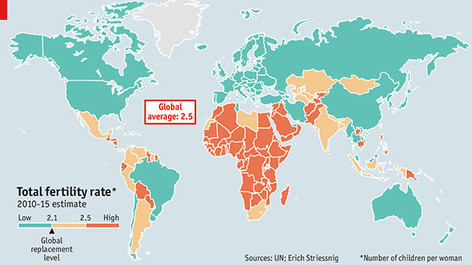
Total Fertility Rate in Ethiopia
The Total Fertility Rate (TFR) is a demographic indicator that measures the average number of children a woman would have during her lifetime if she were to follow the current age-specific fertility rates. It is a key measure used to understand and analyze population growth, fertility trends, and the potential for population replacement.
See More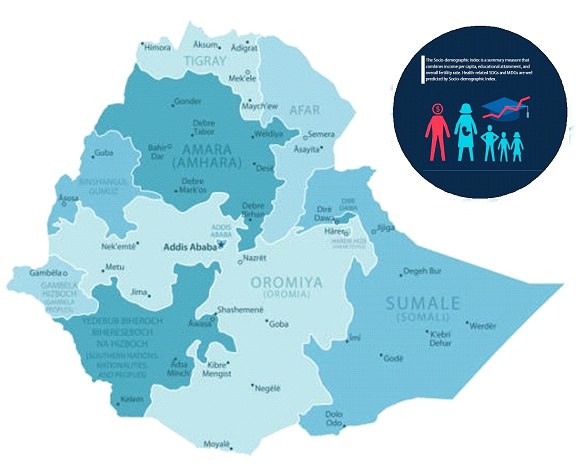
Socio-Demographic Index (SDI) in Ethiopia
The Socio-Demographic Index (SDI) is a composite index used to measure the development level of a country or region based on several key social and demographic indicators. The SDI provides a comprehensive assessment of a population's health, education, and income levels, offering insights into the overall well-being and development status of a geographic area.
See More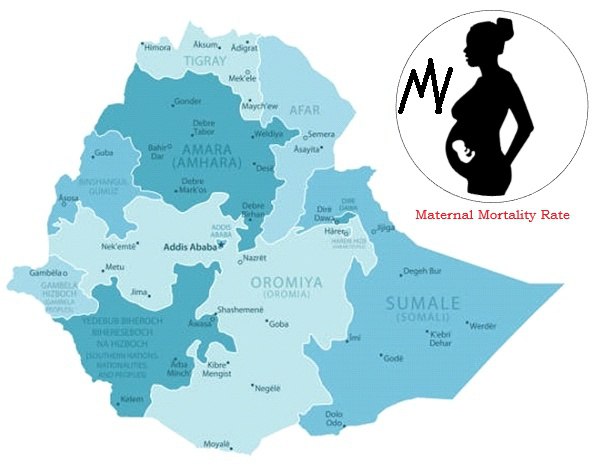
Maternal Mortality Rate in Ethiopia
The Socio-Demographic Index (SDI) is a composite index used to measure the development level of a country or region based on several key social and demographic indicators. The SDI provides a comprehensive assessment of a population's health, education, and income levels, offering insights into the overall well-being and development status of a geographic area.
See More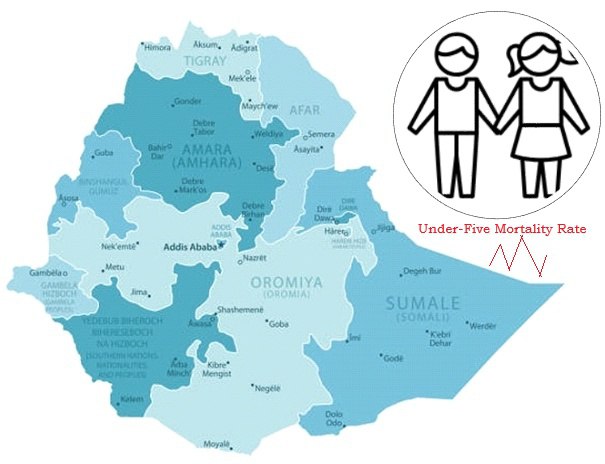
Under 5 Mortality Rate in Ethiopia
Under-5 mortality rate (U5MR), also known as under-five mortality rate, is a critical indicator of child health and well-being. It represents the probability of a child dying before reaching the age of 5 per 1,000 live births in a given year.
See More
Premature Mortality from Non-Communicable Diseases in Ethiopia
Premature mortality from non-communicable diseases (NCDs) refers to the occurrence of deaths related to chronic health conditions that typically develop over a longer period and are often preventable or manageable with appropriate healthcare and lifestyle interventions.
See More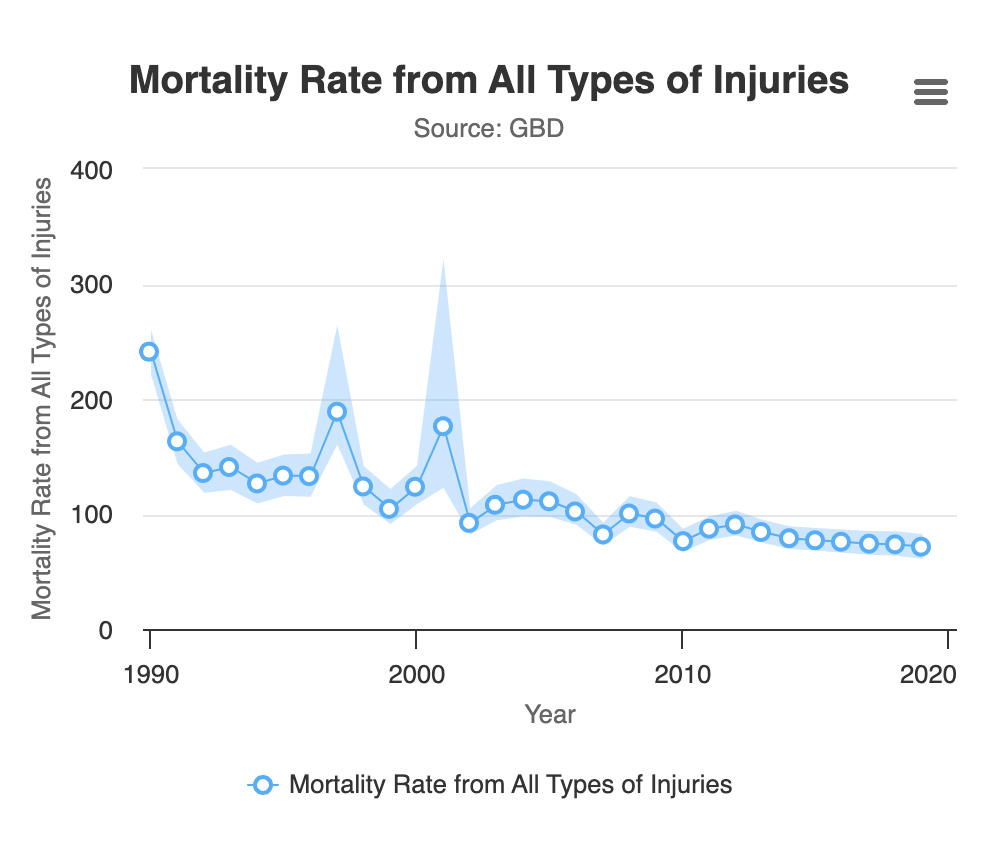
Mortality Rate from All Types of Injuries in Ethiopia
Mortality rate from all types of injuries refers to the number of deaths caused by various types of injuries, including accidents, violence, and self-harm, per a specific population or number of people within a given period, often expressed per 100,000 people.
See More
Malaria Mortality in Ethiopia
Malaria mortality rate refers to the number of deaths attributed to malaria per 100,000 people in a specific population or geographic area over a given time period, typically a year.
See More
Malaria Incidence Rate in Ethiopia
Malaria incidence rate refers to the number of new cases of malaria that occur in a specific population during a given time period, often expressed as the number of cases per 100,000 people per year.
See More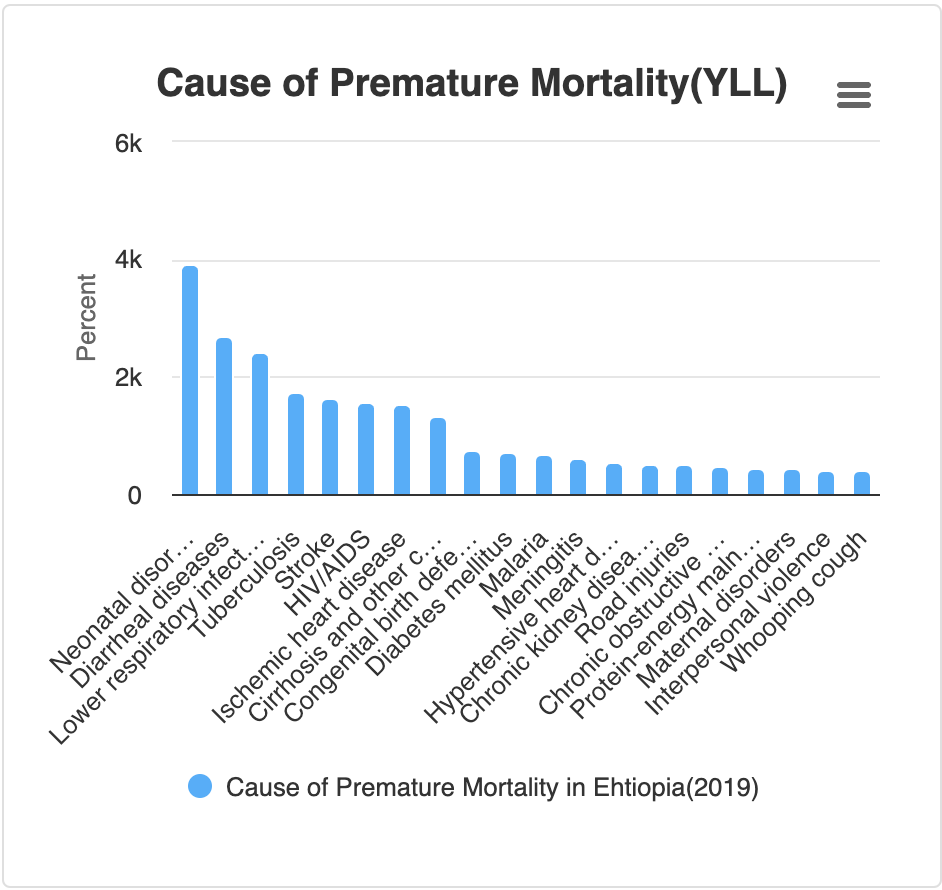
Cause of Premature Mortality in Ehtiopia
Years of Life Lost (YLL) is a measure used in public health to estimate the number of years of potential life lost due to premature death. It quantifies the impact of mortality by assessing how many years a person might have lived if they had not died prematurely. The calculation of YLL involves comparing the age at death to a standard life expectancy, often based on population data.
See More